
A booking platform that looks like the shop, not the SaaS

How we designed and built ClipBook, online booking software for barbershops and salons that keeps the chair full without handing a slice of every appointment to a marketplace.

Barbers and salon owners live with a quiet tax. Most are signed up to one of the booking marketplaces, which means a per-appointment cut, a per-booking client fee, or both. ClipBook is the alternative they wanted but couldn't find. A booking page that looks like their shop, a diary the front desk can run the day from, and a switchboard that moves them off Booksy, Fresha, Treatwell, or Nearcut without starting setup from zero.

The brief covered the whole thing. Identity, marketing site, the public booking experience, the back-office diary, the onboarding flow, and the messaging loop that keeps clients turning up. The shop owners we designed it with were clear on one point. The product had to feel as polished as the haircut. Anything less and it sat in the same bucket as the marketplaces it was meant to replace.

"Keep the chair full." A single promise that sits across every screen, every email, and every reminder

Why barbers were the brief

Barbershops are repeat-business engines. A regular books every three to four weeks, books fast, and almost always returns to the same chair. None of that needs a marketplace. What it needs is a booking link the shop can hand out, a diary the team can trust, and the SMS reminders that quietly take the no-shows out of the week.

The dominant tools were either overpriced (Booksy, Squire) or felt generic enough that every barbershop using them looked the same to a customer who landed on the page. ClipBook had to sit at a price point a single-chair shop could justify on the day it opened, and it had to leave the shop's brand at the front instead of hiding it behind a marketplace logo.
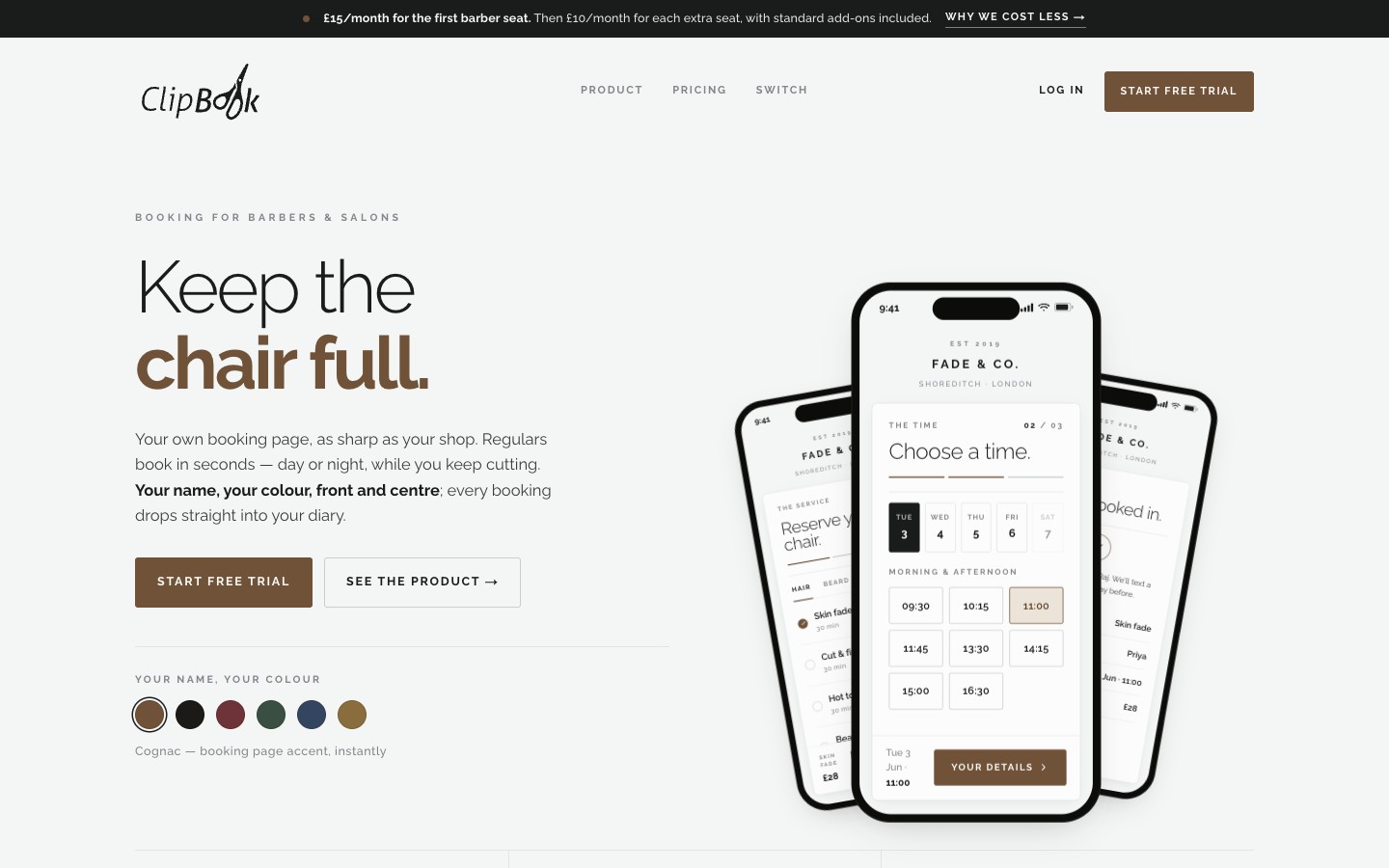
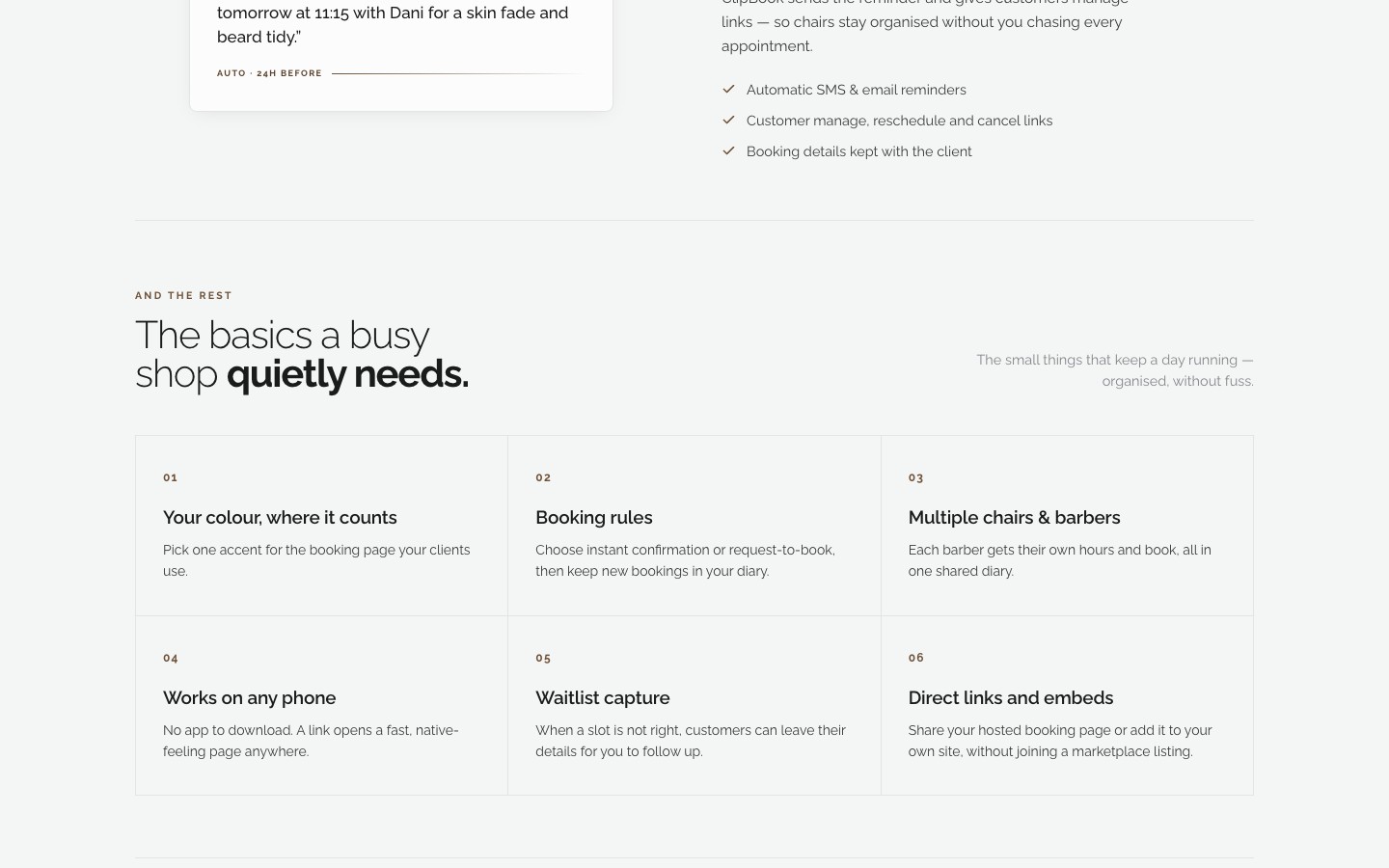
ClipBook homepage with the headline 'Keep the chair full', three phone mockups showing the booking flow, and a row of brand colour swatches for the booking page

The brand

The wordmark sets the rest of the system. A flowing italic with a pair of barber scissors integrated into the "k", the kind of mark that would look right on a hand-painted shopfront and equally right on a phone screen. The palette runs warm and considered. Cognac as the primary accent, espresso brown as the type colour, and a stable of secondary swatches (claret, sage, navy, mustard) any shop can adopt as their own on the day they sign up.

The decision behind the swatches was a small one with a large effect. A barber's booking page is part of their identity. So we made colour customisation a first-class part of onboarding rather than a buried setting. Pick a colour on signup, and the booking page, the reminder messages, and the diary all share that accent on day one.

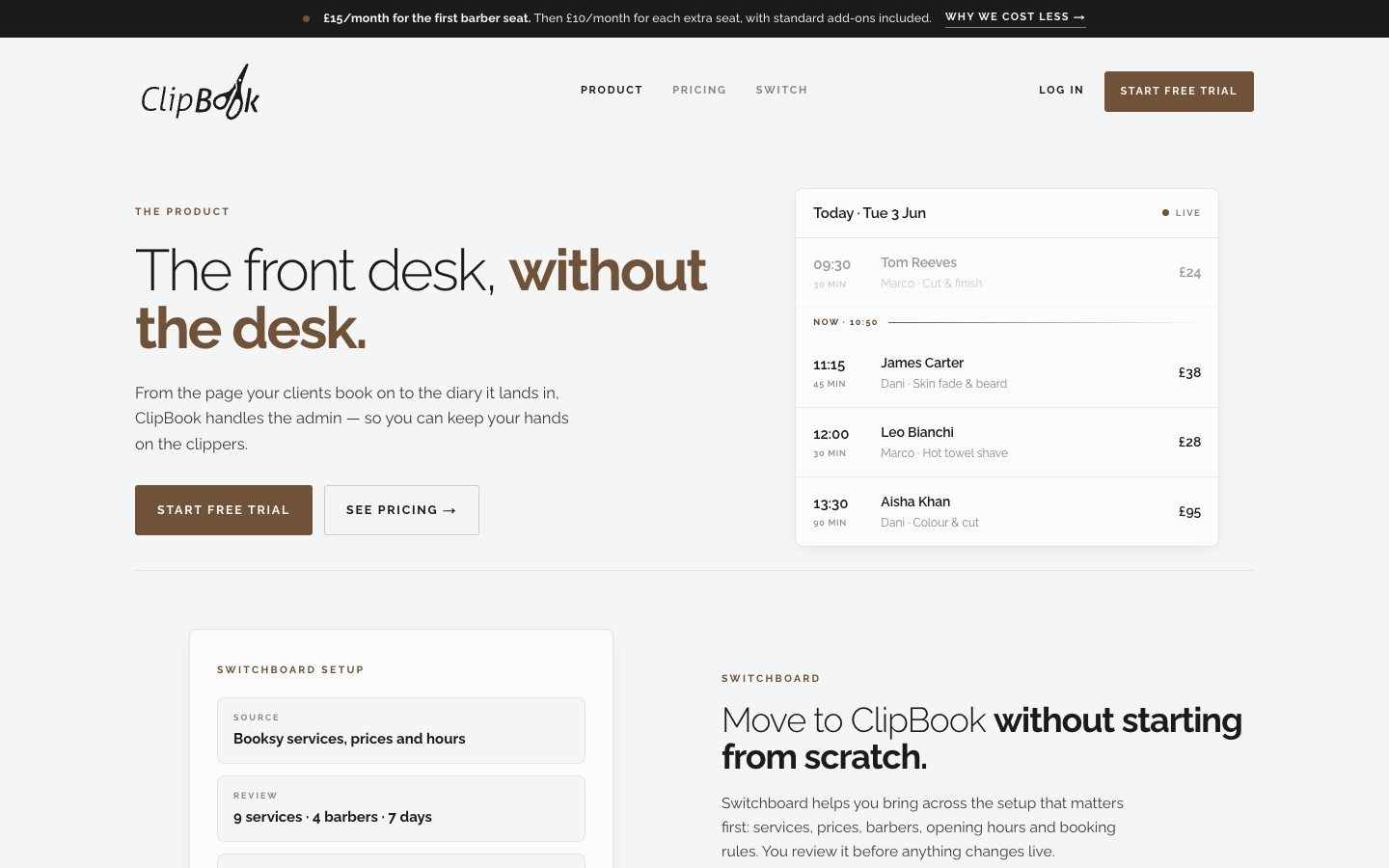
ClipBook product page with the headline 'The front desk, without the desk' next to a live diary view showing today's bookings with prices and stylist assignments

The public booking flow

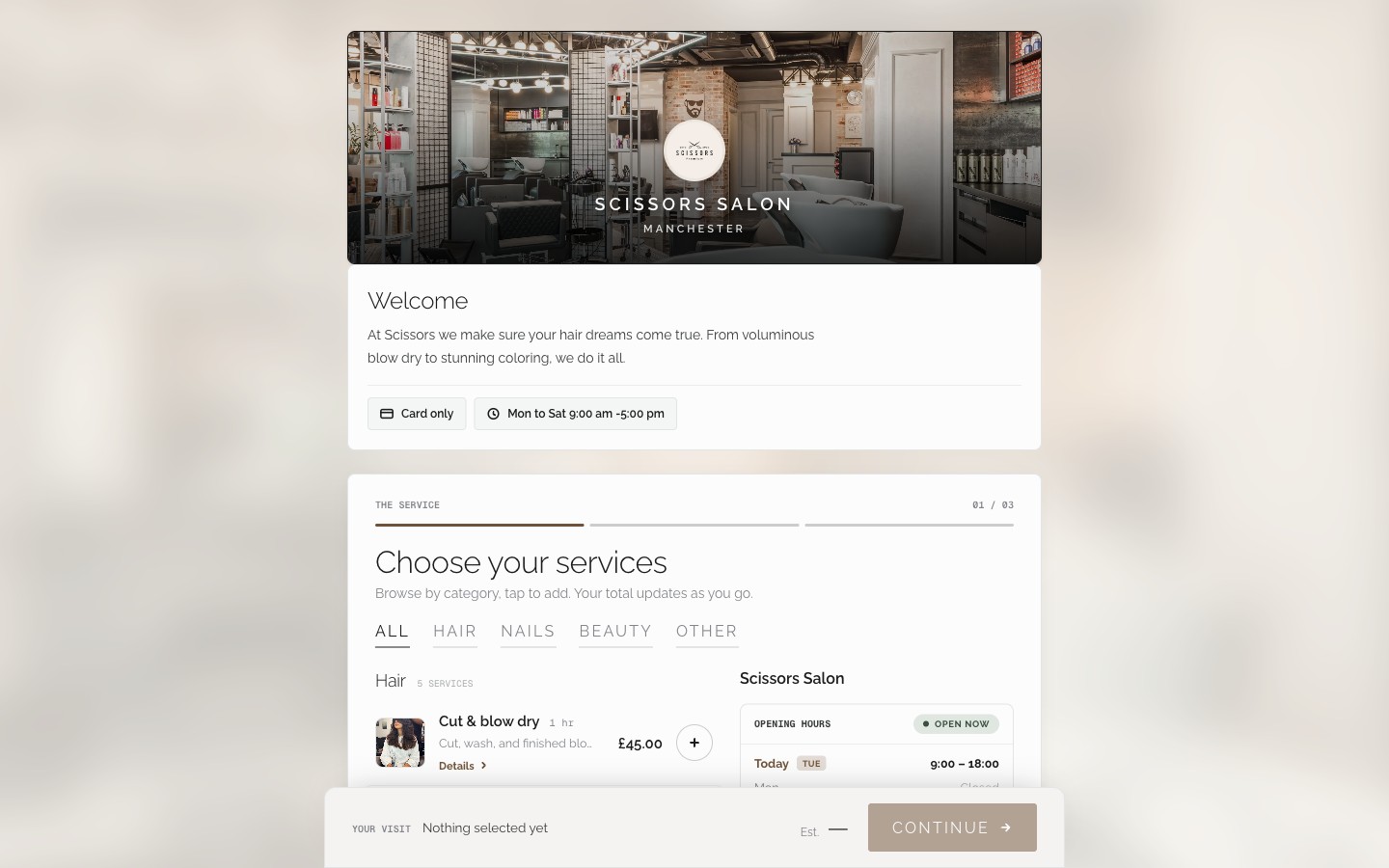
A client lands on a shop's booking page, picks a service, picks a chair, picks a time. The flow is built phone-first because that is where the bookings happen. Service catalogue with prices and durations, a stylist picker with photos and bios, a time grid that shows the same morning and afternoon split the front desk would tell a regular over the phone, and a confirm screen that doubles as the start of an SMS reminder thread.

The whole journey lives on the shop's own subdomain, with their wordmark, their colour, and their photography. The marketplace habit of dumping a customer onto a unified comparison page after they've chosen a shop is the precise behaviour ClipBook exists to remove.

Shops that want protection on busy slots can take a deposit at the point of booking. The card payment runs through Stripe, the slot is held while the customer pays, and the deposit comes off the bill in the chair. Clients get an account too, so rescheduling or cancelling is self-serve instead of a phone call the shop has to answer.

The diary that runs the chair

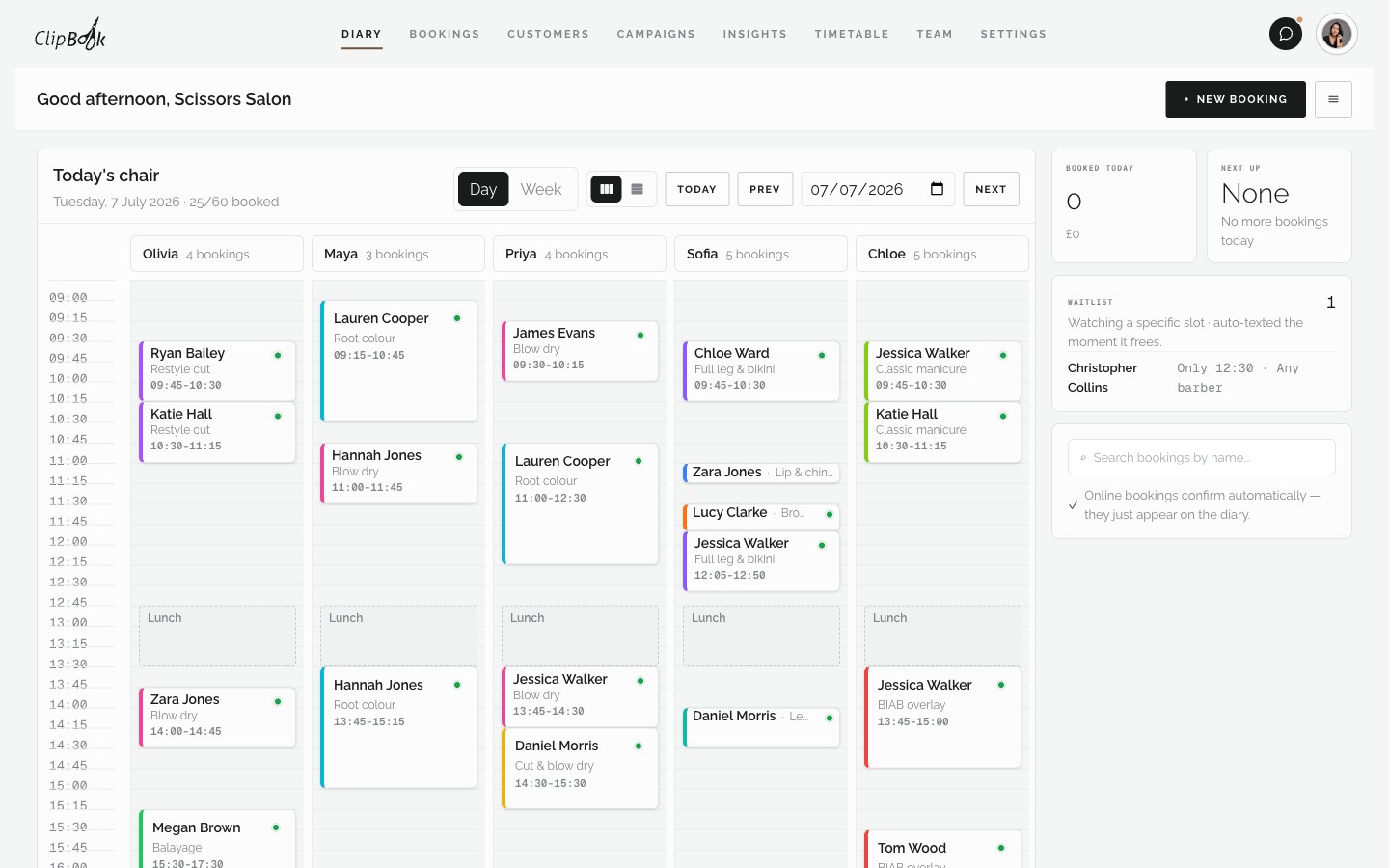
The shop side of ClipBook is a single screen the team works from. Today's bookings stack down the page with a live "now" indicator that rolls forward through the day, each appointment carries its price next to the time, and a glance at the column tells the owner whether the diary is full enough to justify a walk-in or whether to push a same-day reminder for a quiet afternoon.

Underneath the day view sit the small bits of admin that fill a typical front desk shift. Marking a regular as on the way, rebooking a no-show, holding a slot for a private appointment, blocking time for training. The design effort went into making every one of those a one-tap action so a barber mid-cut can handle the diary on a phone without putting the clippers down.

Walk-ins get the same treatment as bookings. A customer scans a QR code at the door, joins a virtual queue, and gets a text when the chair is ready, so the bench by the window stops being the waiting system.

The live ClipBook diary showing a fully booked Tuesday for a demo salon, with colour-coded appointments across six stylists, lunch blocks, and the waitlist panel
ClipBook Switchboard onboarding flow showing imported services, barbers, and the move from Booksy, alongside the headline 'Move to ClipBook without starting from scratch'

Switchboard, not setup

The biggest barrier to leaving a marketplace is the thought of re-entering every service, every price, every stylist, and every set of opening hours. Switchboard is the onboarding layer ClipBook ships with. Point it at a current Booksy, Fresha, Treatwell, or Nearcut setup (or a CSV export from anything else), and it lifts the services, prices, durations, stylists, and opening hours into ClipBook for review. Booking history and client lists come across too, with a proper re-consent step so the shop stays on the right side of its customers and of GDPR. The shop reviews, edits anything they want to change, and picks a go-live date. Nothing in the existing platform breaks until the shop is ready.

The product line we wrote for this part of the site is the one that does most of the work. "Move to ClipBook without starting from scratch." It is the line that turned a software pitch into a switching decision.

Honest comparison pricing

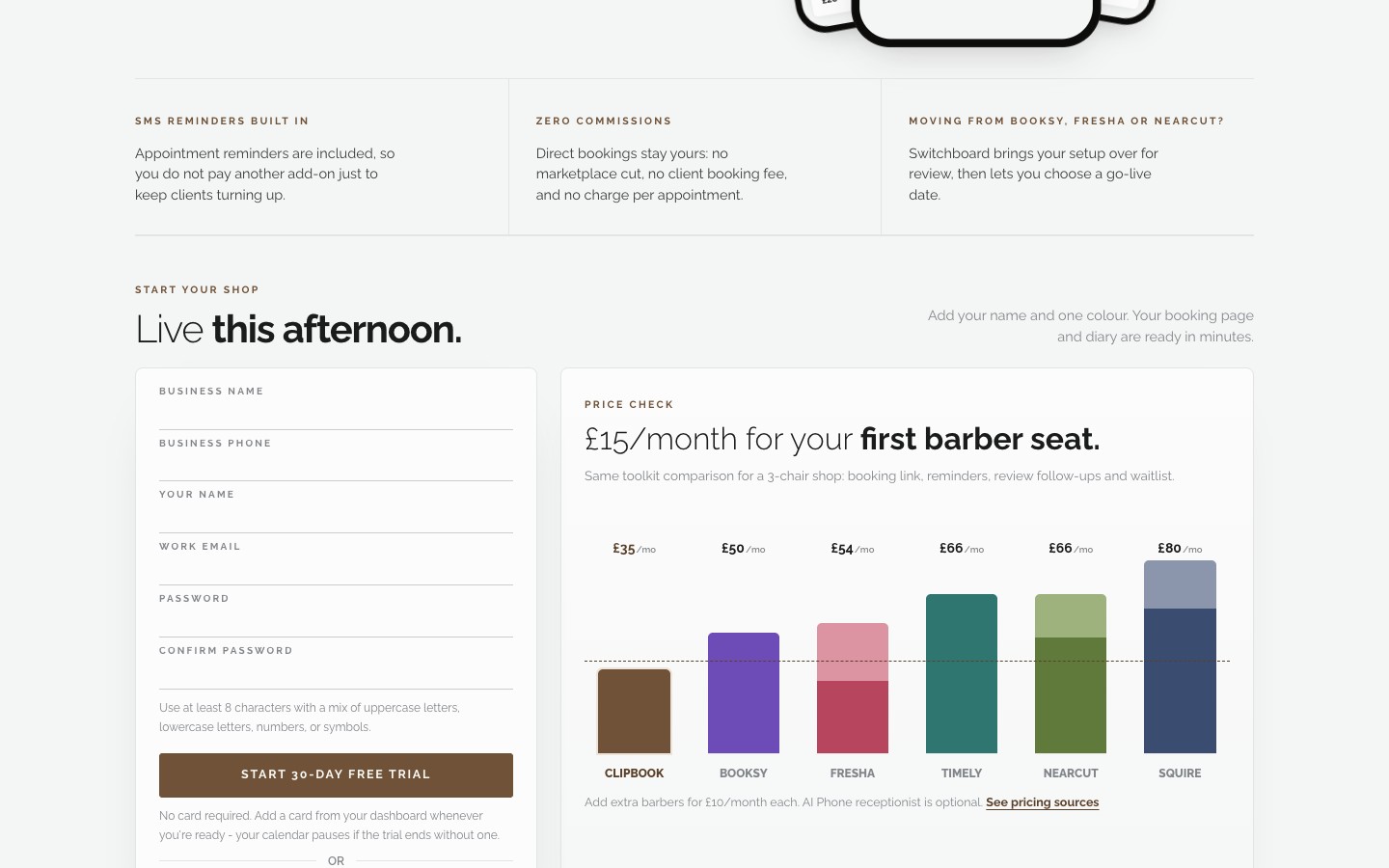
ClipBook is £15 a month for an independent chair and £30 a month for a full shop with unlimited seats, with a 30 day free trial in front of both and SMS reminders and review follow-ups included in the price. The pricing page exists to make the maths against the alternatives undeniable, with a bar chart that compares a three-chair shop's monthly bill across ClipBook, Booksy, Fresha, Timely, Nearcut, and Squire. Sources are linked under the chart. The chart is doing what a long-form sales argument usually has to.

ClipBook 'Live this afternoon' onboarding card next to a bar chart comparing the monthly cost of a three-chair shop across ClipBook, Booksy, Fresha, Timely, Nearcut, and Squire

Where the product has gone since

The version in this study was the launch cut, and the roadmap has kept pace with the front desk since. The diary now ships as a native app on iOS and Android from the same codebase, and Tap to Pay turns the barber's phone into the card reader. A shop can take the payment, add a tip, sell product off the shelf, and text or print the receipt without buying a terminal. A takings view rolls the day up for the accountant, VAT included.

The phone line is covered too. An AI receptionist answers calls, checks the diary, books and cancels appointments, and passes anything unusual to a human, billed by the minute it is actually used. Around the core sit the loops that keep a shop full. Deposits and SMS reminders squeeze out the no-shows, the waitlist offers freed slots by text, and loyalty cards, referrals, and automated Google review requests keep regulars returning and new faces arriving.

A live ClipBook booking page for a Manchester salon, with a photographic hero, a service picker grouped by hair, nails, and beauty, and opening hours beside a running total

What was delivered

  • Brand identity, wordmark, palette, and the shop-level colour customisation system
  • Marketing site covering home, product, pricing, switch, and supporting flows
  • Phone-first public booking flow with service catalogue, stylist picker, slot selection, and Stripe deposits
  • Back-office diary with live day view, slot pricing, and one-tap rebook, hold, and no-show actions
  • QR walk-in queue that texts customers when the chair is free
  • Switchboard onboarding that imports services, prices, stylists, hours, booking history, and client lists from Booksy, Fresha, Treatwell, Nearcut, or CSV
  • SMS reminder loop, review follow-up, and waitlist messaging included in the base price
  • AI phone receptionist that answers calls, checks the diary, and books appointments
  • Native iOS and Android apps with Tap to Pay checkout, tips, retail sales, and receipts
  • Takings and VAT reporting for the accountant
  • Customer accounts, loyalty cards, and referral rewards
  • Honest pricing page with a sourced bar chart against every major competitor
  • Self-service signup flow that takes a shop from registration to a live booking page in an afternoon

The takeaway

The win wasn't shipping another booking tool. It was building one a barber could hand their phone to a customer with and not feel the need to apologise for the design. ClipBook is live at clipbook.co.uk, taking direct bookings for shops that no longer pay a marketplace for the privilege of cutting hair.

Brand, build, and
launch.

If you have a product idea that needs both a design system and the engineering behind it, we'd like to hear about it.

Get in touch